


![Busy port scene with stacked shipping containers, large cranes, and cargo ships in a bay, beside a coastal highway and rail line on the right.] }} (Note: The input requires a valid JSON with an array of strings in altTexts. Here is a corrected version.)Let's provide proper JSON.](https://www.supplychaininforms.com/wp-content/uploads/2026/09/trade-and-logistics-infrastructure-218x150.webp "Turkey Looks to Upgrade Trade and Logistics Infrastructure")




















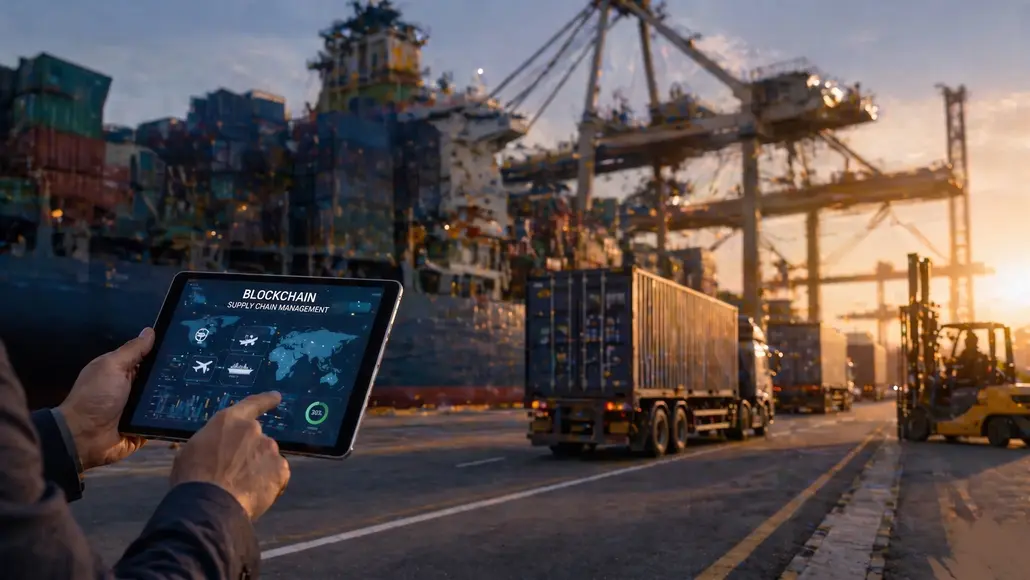
The global supply chain, a colossal and intricate web of interconnected processes, has long been the backbone of international commerce. Yet, for all its sophistication, the movement of freight within this network has historically been plagued by a pervasive lack of transparency. From origin to final destination, goods traverse a labyrinth of intermediaries, jurisdictions, and data systems, each operating with varying degrees of efficiency and often in isolation. This inherent opacity breeds inefficiencies, distrust, and significant vulnerabilities, costing businesses billions annually in disputes, delays, and lost inventory. It is within this complex landscape that the transformative potential of blockchain in supply chains emerges, promising a paradigm shift towards unprecedented freight transparency.
For decades, the fragmented nature of logistics has meant that critical information regarding a shipment’s journey, its origin, current location, condition, and handling, often resides in disparate silos. Billions of physical documents are generated and exchanged, creating bottlenecks, opportunities for error, and avenues for fraudulent activities. When a container leaves a port, its precise movements and conditions are frequently shrouded in ambiguity until it reaches the next major waypoint, if even then. This deficit in supply chain visibility prevents stakeholders from having a unified, real-time understanding of events, making proactive problem-solving a formidable challenge. Supply Chain Informs notes that the vision of a truly interconnected and trustworthy global trade ecosystem has remained largely aspirational, hindered by the very structure of traditional information exchange.
The Foundational Imperatives for Greater Logistics Transparency
Before delving into how blockchain provides the solution, it is crucial to understand the core issues that have necessitated such a technological intervention. At its heart, the problem stems from a fundamental lack of trust and an inability to reliably verify information across a multitude of independent entities. Each participant, shipper, carrier, freight forwarder, customs agent, warehouse operator and consignee maintains their own records, often on proprietary systems that do not easily communicate with one another. When discrepancies arise, reconciling conflicting data becomes a laborious and often litigious process. The journey of a single pallet can involve dozens of handoffs, each representing a potential point of failure, data alteration, or delay. Achieving genuine logistics transparency in this environment has been an elusive goal, demanding a technology that can establish a single source of truth, universally accessible yet impeccably secure.
- Disparate Systems and Data Silos: The fragmented IT infrastructure across the logistics industry means that data is rarely harmonized or centrally accessible.
- Manual Processes and Human Error: Reliance on paper documentation and manual data entry introduces errors, delays, and increases administrative overheads.
- Lack of Immutable Records: Information can be altered or lost, making auditing and dispute resolution incredibly challenging.
- Trust Deficits Between Parties: The absence of a shared, verifiable ledger fosters a climate where trust must be built through reputation and contracts, rather than inherent system design.
These factors collectively impede effective freight tracking and paint a picture of an industry ripe for disruption. The sheer volume and value of goods moved globally daily underscore the urgent need for a system that can inject verifiable integrity and clarity into every step of the logistics process.
Transformative Principles: How Blockchain Redefines Supply Chain Transparency
The advent of blockchain technology offers a compelling answer to these deep-seated challenges. At its core, blockchain is a decentralized, distributed ledger that records transactions in a secure and immutable manner. It’s not just a database. Supply Chain Informs sees this as a new way of organizing and validating information that fundamentally alters how trust is established and maintained across a network. When applied to the movement of goods, blockchain in supply chains transforms the very fabric of logistics operations.
Decentralization and Distributed Consensus
Unlike traditional centralized systems where a single entity controls the data, blockchain distributes the ledger across multiple participants. Each participant holds a copy of the entire ledger, and any new transaction must be validated by a consensus mechanism among the network’s members before it is added. This decentralization eliminates single points of failure and reduces the risk of data manipulation by any one party. For freight movement, this means no single carrier or forwarder can unilaterally alter shipment details; changes must be agreed upon by the network, fostering a new level of collaborative trust.
Immutability Through Cryptography
Once a transaction, such as a shipment departure, customs clearance, or proof of delivery, is recorded on the blockchain, it is permanently etched into the ledger. Each block of transactions is cryptographically linked to the previous one, forming an unbreakable chain. This immutability ensures that all secure logistics records are tamper-proof and auditable. Imagine the impact on resolving disputes: with an unalterable record of every event, pinpointing responsibility for delays or damages becomes significantly easier, dramatically enhancing freight transparency.
Smart Contracts for Automated Execution
A powerful feature of many blockchain platforms is the ability to execute “smart contracts.” These are self-executing contracts with the terms of the agreement directly written into lines of code. When predefined conditions are met, for instance, a shipment arriving at a specific waypoint, verified by IoT sensors, the smart contract automatically triggers the next action, such as releasing payment to a carrier or updating inventory records. This automation streamlines processes, reduces administrative overhead, and minimizes the need for intermediaries, accelerating smart freight movement.
Practical Applications: Building a Transparent Digital Supply Chain
The theoretical underpinnings of blockchain translate into highly practical and impactful applications for logistics and freight movement. The integration of blockchain technology is not merely an incremental improvement; it enables a fundamental reimagining of the digital supply chain.
Real-time Shipment Tracking and Verification
One of the most immediate and impactful benefits of blockchain in supply chains is the ability to achieve unprecedented real-time shipment tracking. By integrating IoT devices, such as GPS trackers, temperature sensors, and humidity monitors, directly with a blockchain network, every movement and environmental condition of a shipment can be automatically recorded on the distributed ledger. This provides all authorized parties with granular, continuously updated information about a shipment’s location and status.
- Origin to Destination Visibility: Every handoff, every gate entry, every mile traveled is immutably logged, providing an unbroken chain of custody.
- Condition Monitoring: For sensitive goods, real-time data on temperature or shock events ensures product integrity and flags potential issues proactively.
- Automated Alerts: Smart contracts can trigger alerts if a shipment deviates from its planned route or if conditions exceed predefined thresholds.
This granular level of detail significantly enhances supply chain visibility, allowing for better planning, more accurate ETAs, and the ability to intervene swiftly in case of anomalies.
Establishing Secure Logistics Records and Auditable Trails
Beyond tracking, blockchain fundamentally changes how documentation and records are handled. Every critical document associated with a shipment such as bills of lading, customs declarations, certificates of origin, quality inspection reports and proof of delivery, can be digitized and recorded on the blockchain. These become secure logistics records, permanently associated with the shipment.
- Tamper-Proof Documentation: Once a document hash is recorded, it cannot be retrospectively altered, eradicating document fraud.
- Simplified Audits and Compliance: Regulatory bodies and internal auditors can easily trace every step of a product’s journey and verify the authenticity of all associated documentation with unparalleled efficiency.
- Reduced Disputes: A single, shared, and verifiable version of all records dramatically reduces conflicts between parties regarding delivery times, conditions, or payment terms.
This foundational layer of verifiable information drastically improves logistics transparency and fosters a higher degree of trust among all participants in the freight ecosystem.
Streamlining Customs and Regulatory Compliance
International freight movement is often bogged down by complex customs procedures and regulatory requirements. Blockchain can significantly ease this burden by providing a standardized, secure platform for exchanging necessary documentation with customs authorities. Smart contracts can automate the submission of data when certain conditions are met, reducing delays and human error. This facilitates faster clearances and ensures compliance with various trade agreements and regulations, benefiting the entire chain.
Enhancing Trust and Collaboration Across the Ecosystem
Perhaps the most profound impact of blockchain in supply chains is its ability to build an environment of trust where none explicitly existed before. By providing a shared, immutable ledger, all stakeholders operate from a common, verifiable set of facts. This fosters deeper collaboration between competing entities, as they can confidently share information pertinent to a specific shipment without fear of manipulation or misuse. This collaborative framework is essential for truly optimizing smart freight movement on a global scale.
Navigating the Path Forward: Implementation and Challenges
While the benefits of integrating blockchain in supply chains are compelling, the journey to widespread adoption is not without its challenges. The logistics industry is vast, complex, and often characterized by legacy systems and entrenched practices.
Interoperability and Integration with Existing Systems
One of the primary hurdles is integrating blockchain solutions with the diverse array of existing legacy IT systems used by various stakeholders. Seamless data flow between blockchain networks and traditional ERP, TMS, or WMS systems is crucial. Developing industry-wide standards and APIs (Application Programming Interfaces) will be essential to ensure different blockchain platforms can communicate effectively, fostering true supply chain visibility across heterogeneous networks.
Scalability and Performance
The sheer volume of transactions in global freight movement demands a blockchain solution that can process millions of transactions per second without compromising speed or efficiency. Early blockchain implementations faced scalability issues, but ongoing advancements in consensus mechanisms and layer-2 solutions are addressing these concerns, making enterprise-grade applications increasingly feasible for blockchain logistics.
Data Privacy and Confidentiality
While transparency is a key driver, certain information within a supply chain remains confidential or proprietary. Balancing the need for shared data for verification with the need for data privacy is critical. Solutions often involve permissioned blockchains, where access rights are carefully controlled, and data is selectively revealed only to authorized parties. Zero-knowledge proofs and other cryptographic techniques are also being explored to allow verification without revealing the underlying sensitive data.
Regulatory and Legal Frameworks
The legal and regulatory landscape surrounding blockchain and smart contracts is still evolving. Clarifying legal standing, ensuring enforceability of smart contracts across jurisdictions, and harmonizing international regulations will be vital for widespread adoption and trust in digital supply chain transformations. Industry consortiums and governmental collaborations are playing a significant role in shaping these frameworks.
The Future of Freight: A Truly Digital Ecosystem
Looking ahead, the role of blockchain in supply chains is poised to become even more fundamental. As the technology matures and integration challenges are overcome, blockchain will serve as a foundational layer upon which other emerging technologies converge. The fusion of blockchain with Artificial Intelligence (AI) for predictive analytics, the Internet of Things (IoT) for pervasive data collection, and Big Data analytics for strategic insights will create an intelligent, self-optimizing, and fully transparent digital supply chain.
Imagine a future where a product’s entire lifecycle, from raw material sourcing to consumer delivery and even recycling, is immutably recorded and verifiable. This level of transparency will not only enhance operational efficiency and reduce costs but also empower consumers with unprecedented insights into ethical sourcing, sustainability practices, and product authenticity. The vision of smart freight movement will encompass not just speed and cost, but also trust, accountability, and environmental responsibility. Blockchain is not merely a tool for incremental improvement; it is an architectural shift that will redefine the competitive landscape of logistics and global trade. Businesses that embrace this shift will be at the forefront of a more secure, efficient, and ultimately, more trustworthy global economy.
In conclusion, Supply Chain Informs acknowledges that the journey towards truly transparent and efficient global freight movement is inextricably linked to the continued adoption and innovation of blockchain in supply chains. By dismantling the silos of information, fostering immutable trust, and enabling real-time verification, blockchain is paving the way for a logistics future that is not just smarter and faster, but fundamentally more reliable and accountable. The era of opaque freight is giving way to a new dawn of freight transparency, promising profound benefits for businesses, consumers, and the global economy at large.